Top Tracks: Taking What's Not Yours
4/10
Top Tracks: Taking What's Not Yours
4/10
Song Machine was a complete change of pace, with Damon and Jamie eschewing the traditional album rollout for a series of 'episodes' comprised of a standalone track built around the style and skillset of the song's feature. This resulted in the best crop of Gorillaz songs since Plastic Beach, but removed any of the broader themes and imagery the project is known for. A season 2 was in the works, but for some reason was scrapped in favour of a more traditional record, Cracker Island, that leaned back into the cartoon band's 'lore' for the first time in a while, but really didn't do much with it's occult theme and is honestly the most tired and by the numbers Gorillaz album yet.
The Mountain, is once again another switch in direction for the band, with the first rumblings of the record a couple of years ago claiming that it would be a spiritual sequel to Plastic Beach. And in some ways it very much is. The record is a big, ornate sounding album that is start studded with features, and has some core themes that run throughout without being too restrictive to date the album. But The Mountain is very much its own beast, with two distinct factors that really make it stand out from the previous Gorillaz cannon. The first is that, following on from a couple of trips to India that Jamie and Damon took, the record features a notable influence from traditional and contemporary Indian music genres - which is something entirely new to the band. The second is that the record features a core theme on death and the afterlife (inspired by both Damon and Jamie losing their fathers in the run up to recording), and such Damon has decided to dig the Gorillaz archives for recordings from previous collaborators who have since passed themselves. These posthumous features are all very tastefully included and to someone not in the know, would just feel like they were recorded for the album and not repurposed from sessions from decades past.
The record opens up similarly to Plastic Beach with a big ornate, orchestral intro. However in the place of the swooning strings of the Sinfonia Viva Orchestra is an ensemble of Indian and Indian-origin musicians playing a piece in the style of traditional Indian classical music. What results is quite an eery and mysterious opening to the record which leads into the next track, The Moon Cave, perfectly. The core of the The Moon Cave is textbook modern Gorillaz: dreamy, whimsical synthpop with a few extra elements thrown in to spice things up. The sitars and flutes continue on from the title track, and are meshed with the hazy synths and a beat switch up and hip-hop verse from Black Thought and the late Dave Joliceour of De La Soul. The track is pretty low-key, but has massively grown on me since release with the dreamy atmosphere and themes around going to 'the moon cave' as a sort of place to metaphorically wash yourself in the water there and let go of the past to make a fresh start.
The next song on the record, The Happy Dictator featuring Sparks, was released as the lead single and is the first of several that deal in the record's other major theme - that of power, control, autocrats and false prophets. Inspired by how Sapamurat Niyazov, the dictator of Turkmenistan from the dissolution of the USSR to his death in 2006, banned bad news in the country as a form of control over his subjects. The track plays into Sparks typical zaniness and pairs it with synthy Gorillaz sound, and because of that very much felt like a Song Machine off-cut on first listen. It certainly works well within the albums context, but I wouldn't say it is the strongest Gorillaz single out there. The God of Lying, featuring Joe Talbot of IDLES, falls into similar territory for me. The Track is built around a dubby off-kilter rhythm that feels like a softer Clint Eastwood, but lacks the punch and genuine weirdness that made the song stand out so vividly 25 years ago. Talbot is also doing his more dejected 'arty' approach to the vocals that has characterised the more recent IDLES records, but its a style I just don't think off he pulls off in much of an interesting way. His strength was always in the rage and fury of the early IDLES records, not this much more wordy, 'tasteful' approach. The song is by no means bad, but taken in isolation outside of the album just feels like an echo of previous Gorillaz highs.
The Hardest Thing and Orange County are a pair of songs that sit together between The Happy Dictator and The God of Lying, and follow more in the line of The Moon Cave revolving around coming to terms with grief and loss. They are a sombre and melancholic duo, with The Hardest Thing essentially serving as a triumphant woodwind and trumpet intro to the more poppy and uptempo Orange County. The songs are direct in their message about letting go of a mentor figure and the worries about living up to their legacy, and very much hit the spot - they feel very end credits-y. As the middle of the record approaches, the two themes start to meld together with The Empty Dream Machine, where Damon as 2D sings about the struggle to come to terms with grief and the desire to look for external solutions to the pain. The song has subtle Indian influences but is one of those moody, slightly autotuned R&B cuts that are always my least favourite on a Gorillaz album. It's fine but does nothing for me.
It's only when we get to The Manifesto that I feel like the album is doing something truly new for a Gorillaz record. The song is a seven minute, multipart banger that initially fuses Indian pop with Latin Rap courtesy of guest rapper Trueno, but then half way through flips on its lid into a hardcore hip-hop beat and a posthumous verse from D-12's Proof recorded when he was stranded in London with Damon in London in the wake of 9/11. The verse does feel slightly shoehorned in to fit the albums themes, but you can really feel the rage and fury in Proof's vocals that it doesn't really matter to me. The song then flips back into dramatic, dancey final section to close it out. The only song that goes nearly as hard as The Manifesto is Damascus, featuring Omar Souleyman and Yasiin Bay (aka Mos Def). The song is built off demos from the Plastic Beach era, and with the Yasiin Bay feature it really feels like Sweepstakes part 2. I really like the song and the Arabian influence is really cool, but the way it builds and builds to a frenzied climax is one for one Sweepstakes. I can say the same thing about Delirium, featuring Mark E. Smith. Mark's vocals are clearly taken from the Glitter Freeze sessions, resulting in the song following its lead. I'm fine with that, as Glitter Freeze is a really unique song and more of that is welcome - but I wouldn't say it's something new and ground-breaking for the group.
To continue with the Plastic Beach comparisons, my only real complaint with that record is that the final leg feels a little drawn out (despite there not really being any one song to single out as weaker than the rest), and I feel the same about The Mountain. The Shadowy light is a synth-driven doo-wap ballad about accepting that everything and everyone comes to an end at some point, and features some of the most prominent Indian language vocals on the record by Asha Bholse, but the overall tune I can take or leave. Similarly Casablanca and The Sweet Prince are dreamy, dreary synthpop tunes that breeze by this point in the tracklist (the album is over an hour long, so the fact that it slows down in the final leg really stands out). Luckily The Mountain ends pretty strongly with The Sad God, which really wraps up the albums themes in a nice little bow, being from the perspective of a benign god looking down at the world and lamenting in all the man made horrors that we as a species have created. It musically calls back to the title track making the whole experience feel very complete. It might actually be the best closer to a Gorillaz record thus far (Pirate Jet is a better song, but feels more like a coda than a closer to me).
The Mountain is a bit of a mountain of a record, but I'm enjoying that for the first time since Plastic Beach, there is more to engage with on a conceptual level. It's not some era defining staple that Demon Days and Plastic Beach have become, but it's certainly a lot more interesting than most of Gorillaz' post-hiatus work. It does feel like it's living slightly in the shadow of Plastic Beach especially (with how much it clearly draws from those sessions and collaborators), and there aren't really any songs (bar The Manifesto) that show their strengths when taken out of the album context. It's almost the inverse of Song Machine. That record is pretty much all bangers but I very rarely listen to it as a full album because there's no cohesive theme or throughline. Whereas The Mountain really works as an album, but not as a collection of songs in isolation. I'm intrigued where Damon and Jamie go next with the project, because they certainly seem more invigorated with this record in interviews than they had been with the last few.
Top Tracks: The Mountain, The Moon Cave, The Hardest Thing, Orange County, The Manifesto, Delirium, Damascus, The Sad God
7/10
The sound of Imaginal Disk is a kaleidoscopic collage of early 00's synth pop and dance pop, indietronica, psych pop and progressive pop, and even a bit of chillwave and late 90's female singer/songwriters. It is such a tightly written and amazingly produced record. Every track has so much attention to detail, little quirks, and leftfield switch-ups or unique progressions that makes the record envelop you, as you get lost in the sound. The tracks seamlessly flow into each other, making the album feel like a real cinematic journey over its 53min runtime.
Lyrically and thematically, the record is just as ambitious, exploring the ideas of an idealised 'perfect' sense of self and struggle between chasing the idea that we have to be perfect to be happy (or to please others) and forging your own unique path where you can be fulfilled without fitting neatly into a predefined box. Going hand in hand with this is a lot of lyrical focus on the difficulty discerning between 'true love' and love and companionship out of convivence and comfort and whether the former is actually real and obtainable, and the latter inauthentic and ultimately unfulfilling. These ideas are left open ended, which I think really adds to the experience of the record as if its almost trying to get you to ponder these concepts yourself as opposed to just throwing them at you as a definitive worldview. They're also not really obvious on first listen, rather layered into the subtext, which is giving the record huge replay value for me.
The first leg of the record is phenomenal, opening with building opener She Looked Like Me!. The first half of the song builds up with glitchy synths and booming drums, before switching up into a tension building second half with triumphant horns. The lyrics depict a strange encounter with the protagonists doppleganger, and the existential reflection on ones own uniqueness and identity. This leads into the woozy and groovy Killing Time, which explores the themes of 'killing time' and constantly putting of dreams and waiting for the ideal moment. The dreamy Enya-sounding True Blue Interlude segues this into the album's lead single, Image. The song is an absolute banger of an alt-dance tune with an infectious groove and Mica Tenebaum's silky smooth vocals gliding above the beat. "Ooooh my God, Make me in your image" is the leading hook and damn it sounds so sexy. Death & Romance follows straight after and somehow tops Image. The house-esque staccato piano hits, spacy synths and Mica's vocals sounding like Kylie give the song a very 00s dance-pop feel. The track just keeps ascending and ascending to this euphoric place - which juxtaposes the ecstatic feel against some quite heavy lyrics pondering whether there is anything more to life beyond the songs title. This run comes to a close with Fear, Sex, which serves as an outro to Death & Romance that unwinds the beat and reworks it into something more sinister as the driving forces of death and romance are presented under a different light - being fear and sex.
Other highlights include the sombre and sprawling ballad, Watching T.V. (a track about the prevailing fear during the 2000's that watching too much T.V is mentally damaging and also the idea of losing yourself in the screen while avoiding reality) and the epic Tunnel Vision. The song starts out as quite a stripped back synth pop song with chiming synths, before the protagonist realises that they are developing tunnel vision in their life and that they need to get out. At this point the song flips on its head for a hypnotic space rock outro. The thick, heavy base and skittering, lazer-like effects sound so sinister and menacing. This is followed by the super light and breezy synth funk jam, Love Is Everywhere, a perfect antidote to the darker middle section of the record of the record that has preceded it. The bombastic dance pop vibes return with the very in your face That's My Floor, a track all about taking life by the scruff of it's neck and making it your dancefloor. It's kinda garish but in the best way, with a sitar middle section and a scratchy funk-rock guitar outro. Similarly, Cry for Me is a straight up throwback to the groovey Nu-Disco of the early 00's and is great fun.
The record closes with Angel on a Satellite and The Ballad of Matt & Mica. Angel on a Satellite strips out all the synths for an approach akin to late 90's pop-leaning singer / songwriters. The song is a nice change of pace for the record and really highlights the emotionality of the lyrics of trying to forge your own path against the metaphysical will of an 'angel on a satellite' above you. All of the records themes are tied up and brought into the real world with The Ballad of Matt & Mica, a joyous ode to the duo, their friendship and their pursuit of the dreams over a pre-determined 'easy life'.
What I truely admire about Imaginal Disk, is that as heavy and thoughtful the lyrics and themes of the record, it is so thoroughly enjoyable and uplifting. Literally every time I put it on, I come away in a better mood than when I started. That is on top of how intricate and well constructed it is, alongside that it is damn catchy. I'm so glad that I've been turned onto Magdalena Bay because this album is such a refreshing and unique experience.
Top Tracks: She Looked Like Me!, Killing Time, True Blue Interlude, Image, Death & Romance, Fear, Sex, Watching T.V., Tunnel Vision, Love Is Everywhere, That's My Floor, Cry For Me, Angel on a Satellite, The Ballad of Matt & Mica.
9/10
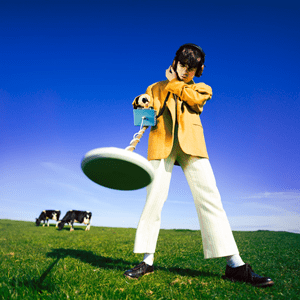
On What Happened to the Beach?, Declan has ditched a lot of the glam rock aesthetics that characterised his previous release, Zeros; replacing them with influences of 60's psychedelic pop and sunshine pop, alongside more modern neo-pysche and hypnagogic pop. I can here shades of The Kinks, The Beatles, MGMT and a whole host of others on the these tracks, and I think this vibe suits Declan's persona much better. On WHTTB? Declan comes across like some weird Hollywood old-timer, who's spent a little too much time in the sun and is just on a planet of his own. He sells this subtle off-kilter weirdness so much more easily than the ostentatious glam rockstar he was playing on Zeros. Similarly, the hit or miss social commentary of Declan's previous work is largely absent, replaced with more personal and introspective lyrics mostly focusing on the social disconnect and pressure of expectations that come with fame. All of this together creates a woozy and hazy vibe, like some sort of summer malaise.
The record opens with the worbly and distorted intro track, WOBBLE, where the album title is repeated again and again, before launching into the breezy but moody Elevator Hum. This track, alongside Mullholland's Dinner and Wine capture this summery yet melancholic vibe perfectly. Both have this feeling of existential longing to them, and are the best tracks on the album. On Elevator Hum. glistening synths are set against a trip-hoppy breakbeat and faint distorted horns that finally poke through the mix towards the end of the track. Mullholland's Dinner and Wine similarly fuses a chill synth-funk bassline with woozy distorted horns and some really existential lyrics where Declan describes all of the things fame has given him but how he's still not satisfied.
There are some other great moments on the first half of the record. I Write The News starts off as a Lennon-esque acoustic guitar cut with lyrics that in typical Lennon fashion appear to be profound on the surface, but are actually just nonsense upon closer inspection. The track then flips on its head, with the guitar swapped out for bouncy psychedelic synths. Nothing Works is a catchy indie pop rock tune, with fuzzed out and noisy production that gives it a real sense of energy that matches some of Declan's biggest hits. This is followed by the raucous The Phantom Buzz (Kick In), which is about the last remnant of the glam rock aesthetic of Zeros. The guitars roar and Declan Howls on the mic.
Not everything on the record lands as well as these moments. Lead single Sympathy is such a straightforward sunshine pop tune, it feels kind of derivative and lacks any of the genuine oddball energy that permeates the best of the record. It just sounds like a Kinks pastiche in all honesty. Breath of Light feels like an attempt at the weirder, uncommercial side of MGMT's music, and is fine but nothing particularly interesting. Honest Test is a crooning lounge pop song that reminds me of Arctic Monkey's excursions into the genre, although I'd say its closer to one of the duds on The Car than the genuinely interestingly written stuff on Tranquillity Base.
The record comes to quite a sleepy and uneventful close, although the final couple of songs have grown on me to an extent. The gentle acoustic guitars and simple vocal melodies of Mezzanine have such a low-key summery vibe, and the subtle swelling of horns and electric guitar as the song progresses is actually really nice. The penultimate track, It's An Act, is in effect the closer, as the final track is essentially just a short little coda, and is perfectly serviceable, although pretty uneventful and unimpactful.
I feel like Declan has found a sound that really fits him on this record, and has produced his most consistently enjoyable album thus far. Not every song hits as hard as others, and there are points that feel a little derivative, but its a good time with more wins than losses.
Top Tracks: Elevator Hum, I Write The News, Mullholland's Dinner and Wine, Nothing Works, The Phantom Buzz
7/10