Showing posts with label Blue-Eyed Soul. Show all posts

Saturday, 31 May 2025

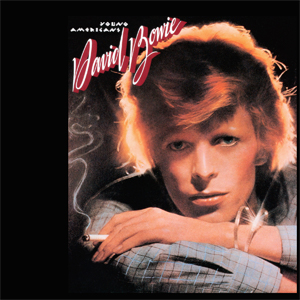
David Bowie - "Young Americans" (1975)


I promised you I would get back to going through David Bowie's discography! Way back during the pandemic I was listening through David Bowie's records and reviewing them on here. I managed to get up to Diamond Dogs before the opening up of the real world again got on top of me. I have listened all the way up to Scary Monsters (And Super Creeps) but never found the time to write about them. Diamond Dogs didn't really land with me and truth be told I don't think I've listened to it since that review. It was a bit of a mess of a record that had way too many half formed and thinly sketched ideas. One of those ideas was the incorporation of soul and funk music into his sound. These genres were nothing more than set dressing on Diamond Dogs, but this time around Bowie has dived fully into them; basically making a pastiche of the genre that he himself dubbed as 'plastic soul'.

I feel like Bowie's slightly dismissive terminology when referring to the record and the complete genre switch-up has led to the album getting a bit of a bad wrap from fans, often getting dismissed as neither a 'proper soul record' or an authentic Bowie piece of work. I think this sentiment is rather misguided, as while it isn't the very best of Bowie's discography, it is actually pretty good and personally I think it's a way more coherent and impressive record than Diamond Dogs.

The record is bookended by its two biggest songs, the title track and Fame. Young Americans is a loose and groovy soul jam and a great showcase of what the album is about. Bowie's earnest croon builds into an anthemic refrain over a steady drum beat and expressive saxophone with excellent backing vocals that give a real sense of gravitas to the song. Fame on the other hand is a swaggering funk tune that oozes confidence and coolness. The song is about the consequences of fame (a topic Bowie explored a bit in Aladdin Sane), and has a sinister undercurrent to it that in retrospect feels like a taste of what to come on Station to Station and the Thin White Duke persona.

The six songs that sit inbetween these tracks continue the very sensual and relaxed vibe of the two singles, making a bright and summery experience. The whole album just feels very loved-up and warm. Win slows it down with woozy guitar licks and smooth crooning from Bowie. It is a very gentle and tasteful moment on the record. Fascination is another meaty funk tune and has a real swagger to the call and response pattern between Bowie and the backing vocals. The Sax once again has a field day on this song. Right rounds out the first half with a wild mashup of the two genres, starting out very slow and emotive, before being overtaking by the funk groovy and vocals more powerful. Bowie sort of takes a backseat on the song, handing over the reigns to the backing vocalists

The back end isn't quite as engaging as the first half, and similarly to his Rolling Stones cover on Aladdin Sane, Bowie's rendition of The Beatle's Across the Universe is a bit of a clunker. He kind of butchers it if I'm being honest. All of the whimsy and wonder of the original is just stripped out, and replaced with Bowie just completely over egging the vocals. Somebody up There Likes Me is the longest song on the record and the one that feels the most like a pastiche and by the time Can You Hear Me rolls around as the penultimate song it does feel like the album has shown all its cards and run out of ideas. I'm glad that Fame kicks the album into gear again so that it ends on a strong and memorable footing.

Young Americans is a good album and a pretty successful foray into the worlds of soul and funk for Bowie. I think it is also really important in his development as an artist, with what would immediately follow with Station to Station and also down the line in the genres' incorporation into his biggest commercial hit, Let's Dance. It really doesn't deserve the reputation it gets from fans.

Top Tracks: Young Americans, Win, Fascination, Right, Fame

7/10

Saturday, 14 October 2023

Hozier - "Unreal Unearth" (2023)


Hozier's debut record has held up well for me over the years, being a brooding and sinister record in places, but also witty and tongue in cheek in others. Tracks like Jackie And Wilson and From Eden are basically non-skips for me when they come up in shuffle. 2019's follow-up, Wasteland Baby!, on the other hand, really didn't stick with me. I felt it was just so much less inspired and far more commercial and generic. The only track that I regularly come back to from it is No Plan these days.

Unreal Unearth is certainly more ambitious, being an hour long semi-narrative record loosely following Dante's Inferno. I'm not really a literary guy, so I can't really comment on how well the album captures the themes of the book or whether it adds anything interesting to them, but it definitely has a greater feeling of heft and importance than Wasteland Baby! ever did. This is evident from the opening two part De Selby. The first part being this moody and sinister folk tune where Hozier sings in Irish about the connection to self and God, the second being a bombastic pop soul tune showing the flip side, where he sings about running fast enough to escape the things he doesn't want to face. I felt Part 2 was a little clean and polished when I first heard it, it felt like everything in the song had been turned up to 11. It's grown on me a fair amount since then, as Hozier gives it all in the performance and the hook on the song is damn catchy.

I have similar feelings about Francesca, the massive 'Take Me To Church'-esque single from the album. Initially I thought it was fairly standard Hozier, nothing we haven't heard from him before, and with a little more gloss than I would like. But the song at the core of it is pretty damn great and outshines the slightly overblown and unimaginative production. Eat Your Young is definitely the album highlight, with gorgeous cinematic strings soaring over bluesy guitars and Hozier's very dry, sarcastic lyrics tackling the logical extremes of neo-liberal, late stage capitalism. The gory imagery of 'eat your young' is about the closest the album gets to some of the more morbid stuff from the debut that was always really engaging.

While the cinematic and overblown production benefits some of the songs on the album, it certainly hinders others. Damage Gets Done is probably the worst offender, as it just seems every decision on that track knee-caps it in every way. It's a blown out new wave duet with horrendous booming reverb gated drums. It's not a style that I think Hozier is particularly equipped to pull off, but everything about the track is so garish and un-delicate. Hozier and Brandi Carlile spend the entire time fighting to be heard against each other and the ridiculously overpowering drums. On the whole, due to the albums length and how its mixed, I'm finding I'm getting ear fatigue by the end of it. Every track turns it up to 11 and there's just no space to breath. It's not an abrasive record, its just too loud and too overproduced.

The two tracks that really sell the cinematic atmosphere are the midpoint interlude, Son of Nyx, and the closer, First Light. They both use the string section to maximum effect. Son of Nyx is subtle and mysterious, and First Light is the linear, building, uplifting closer that the record needs to bring it out of the darkness and into the light. This is definitely Hozier's most downbeat album, and it can come off a little needlessly self serious at points - it does get a little bogged down in the second half and by the time Unknown / Nth draws to a close I am in desperate need of the uplift that First Light brings.

Unreal Unearth is definitely a more interesting and ambitious album than Wasteland Baby!, but its definitely has its issues and is a long way off the high bar set by the debut. There are a handful of really catchy soul and singer / songwriter songs that I really enjoy, but their wrapped up in an album that is a bit too bloated, a little too self serious, and way too overproduced. It's definitely a pick your favourites and save them kind of release.

Top Tracks: De Selby (Part 1), De Selby (Part 2), Francesca, Eat Your Young, Son of Nyx, First Light

6/10

Tuesday, 15 November 2022

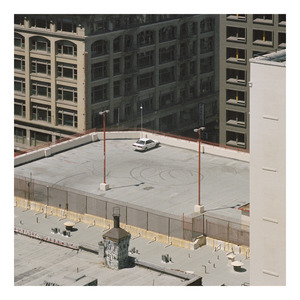
Arctic Monkeys - "The Car" (2022)


Arctic Monkey's last album, 2018's Tranquillity Base Hotel + Casino, proved to be quite divisive - discarding AM's pop rock riffs and coked up bravado that blew them up into global superstars in favour of a tongue-in-cheek 70's-esque lounge pop sound and Alex Turner rambling about about a hotel on the moon. I, for one, loved it. AM's swaggering cockiness always felt a little one note to me, and the shift to taking themselves a little less seriously (once again) made for a much more interesting listen. It also helps that the songs are actually really well written and there is a fair amount to dig into with the themes and subtext of the record beyond Alex pretending to be some washed up rockstar singing in a lobby of a fictional moon resort. The Car, on the surface, appears to be following in TBH+C's footsteps, forgoing any semblance to indie rock for a 70's inspired baroque pop and soul record. But when digging a little deeper, it feels a lot closer to AM than TBH+C, and not in a good way.

What I mean by that is that it feels much more earnest and self-serious, and somewhat of a pastiche (or even a novelty) of the genres it's mimicking. AM borrowed from 70's hard rock riffs and matched them with Alex's fairly generic 'rockstar' posturing - 'sex, drugs and rock'n'roll' and the like. The Car does the same thing, but replaces these elements with layers of lavish strings and pastiche funk guitar likes, and Alex's formless, lounge-y vocals sprawling over these tracks with little regard for metre or consistency. He did this a bit on TBH+C, but it was much more restrained there, and also fitted with the character he was playing on that album. However, when this album is clearly trying to be taken a lot more earnestly, it just comes of as a kind of bad vocal performance. In places, it feels like he is trying (and failing) to do his best Bowie impression, which made me associate the album with a phrase Bowie said to describe his foray into soul and funk - "plastic soul". Bowie used it as a reference to how he originally wasn't part of the soul scene and he was a plastic imitation of it (I disagree - and I'll get back to the Bowie reviews I promise); but that descriptor seems apt for The Car. While as lavish and ornate as it sounds, it just feels plastic-y and uncanny.

The record opens with by far its best track, the lead single There'd Better Be A Mirrorball. It's the only song I wholeheartedly love on the album and I think best represents what the band is going for on here. It is a heartfelt and sentimental break up ballad set to swooning and cinematic strings and a warbling synth line. The lyrics are some of the sweetest and most grounded Alex has ever written, and the track builds such an atmosphere to accompany them. It certainly feels like it could accompany a movie scene of someone walking back to their car in the rain post-breakup. This atmosphere is unfortunately killed right away by the following track (and first one they teased live) I Ain't Quite Where I Think I Am and its tacky 'wah-wah' funk lead guitar part. The song just feels like such a hodgepodge of ideas that never really connect together. The lyrics are disconnected and all over the place, supposedly reflecting a disconnect Alex feels between himself and the environments he finds himself in, but there's too many obtuse references and metaphors masking any sort of depth in the lyrics. I do quite like the string instrumentation that comes in for the chorus, but the cheesy funk guitar comes straight back in for the second verse and takes me straight out of the song. The song feels like a half formed b-side, not one of the big singles from the record.

Sculptures Of Anything Goes has drawn comparisons to AM, which I can certainly see as the mix is mainly comprised of Alex's vocals set against a super-heavy Moog synth bass part - similarly to AM's bass heavy mixes. Once again there are parts of the song I do like; the focus on the synth bass gives the track a lot of tension, and the contrast between it and the strings in the back half of the song is some of the most dynamic use of the orchestra on the album. However, similarly to I Ain't Quite Where I Think I Am, the themes of the song are buried in obtuse references that take away from the emotional resonance; and Alex's performance frankly doesn't do it any favours - he just sounds so underwhelming when set against the drama of music. Jet Skis On A Moat is perhaps my least favourite on the record, with Alex cringily crooning over returning 'wah-wah' guitars. The whole thing feels like the edgeless smooth.fm soul designed to appeal to the type of boomer that can't stand any passion or fire in their music. It really rubs me the wrong way. This leads into the big centrepiece of the record, Body Paint. The track does have its moments, but much like many of the moments on the first half, aimlessly meanders through its disparate sections not really building to a greater whole. It also may be Alex's weakest performance on the record, where the inflections are the most egregious and his voice in general coming across strained and raspy.

The second half of the record is more consistent, sonically and quality wise. The album settles into a more run of the mill vintage baroque pop sound, and Alex's delivery becomes more restrained and professional. However, I will say while there's not much I outright dislike about these songs, they also don't have that much unique going for them to make them stand out. They don't even sound particularly 'Arctic Monkeys' - they're just missing a bit of the snark and tonge-in-cheek fun. There are a couple of songs on the back half that I do enjoy, being the title track and Hello You. The Car is nostalgic look back at childhood memories related to the family vehicle, and features some lush jangly acoustic guitar and melancholic piano. The track feels quite tense, and is so close to being really good - I just wish it had more of a fully formed chorus or climax to pay off that tension. Hello You is apparently the only track that survived the band's first attempt in the studio back in 2019, and certainly feels the closest to TBH+C with it's oddball stream of consciences lyrics and more playful, quirky energy. The song is one of the most dynamic on the record, with a catchy chorus and a somewhat bouncy interplay between the lead guitar and string parts on the song.

It's a shame that following Hello You, the album limps out with two of its least notable and most underwhelming tunes. Mr Schwartz is a fine, bog standard bossa nova cut, and the closer Perfect Sense feels like it's attempting to be some semblance of a big cinematic closer, but then chickens out before it ever gets there, and then the album just kind of ends. My first listen to the record was while doing some jobs and I wasn't looking at the tracklist and I genuinely thought "Oh is it over?.." when the track finished.

The Car isn't an awful album, and it's not like I don't think it's a sound that the band can't do. I loved TBH+C and Alex's two albums with The Last Shadow Puppets that play in a lot of similar soundscapes. It's just I feel that these are easily the weakest crop of songs the band has come out with so far, and some poor aesthetical choices particularly in the first half make it a kind of drab and tiresome listen. As much as I personally have problems with AM, at least that album succeeds in having a load of fun catchy hooks to draw you in, so I can safely say that this is my least favourite record from the band thus far. (I'd still take it over the boring, commercial, 'safe for Radio 2' garbage that a lot of the bands from this generation are making nowadays).

Top Tracks: There'd Better Be A Mirrorball, The Car, Hello You

5/10
Friday, 23 September 2022

Paolo Nutini - "Last Night In The Bittersweet" (2022)


Paolo Nutini is a favourite of mine from my adolescent years, with his work cumulating in the dramatic and grandiose Caustic Love in 2014. That record is still one that I spin regularly, having a timeless energy to it, eschewing the acoustic pop and folk of his first two records for a fuller and more rich combination of blue-eyed soul and bluesy indie rock. After touring for the album finished, Nutini largely dropped off the map for the following eight years, re-emerging with this, his fourth record. The album very much follows on from Caustic Love, incorporating a large full band sound with dramatic and detailed production. The influences at play in that album have further coalesced into a sound reminiscent of 70s soft rock - think Rumours era Fleetwood Mac. What results is a long and quite patient album that goes at its own pace. There are some of the more 'rocking' moments on here, but its quite clear that Paolo is more interested in being an earnest songwriter than a captivating showman on here.

All is evident from the 4 minute intro track, Afterneath, a slow build up of rumbling guitars and bass with Paolo's distant wails in the background. It's not the catchy and punchy single that his album's have previously opened up with. It then leads into Radio, a very relaxed and soulful soft rock tune where Paolo laments the disingenuousness of pop music and that "he wants love" and something he can truly relate to. I really like the song, but its one that quietly wraps around you and is content that it doesn't actually have to try all that hard. Again it's a song for Paolo himself, not the radios it is titled after. Following this is two of the singles, both very earnest singer/songwriter tracks, both equally beautiful and soothing. The first of these is Through The Echoes, where Nutini details a connection he has with someone that transcends their differences. Similarly, Acid Eyes yearns for the past and regrets mistakes made and feels like Paolo coming to terms with these regrets. It's sweet and honest and great. 

The next track is then a spoken word interlude, which means that Lose It, the sixth track and 20 minutes into the record is the first time it really breaks lose into a more up-tempo and momentum driven mode. Lose It is akin to some of the longer more blues rock influenced songs on Caustic Love, with its driving fuzzed out guitars and Paolo sounding gruffer and more gritty. The song is about letting go and just enjoying yourself - its great to just sing along to and forget the world. It builds and builds, introducing backing soul vocals and extra guitars and keyboards as it progresses to the climax. The other linear barnburner on the album, comes much later in the tracklist, being Shine A light, a song that sounds more influenced by heartland rock than the blues of Lose It. Equally great, it reaches outwards, trying to counter the loneliness and isolation you can feel at times.

In between these two songs, the album then returns to its unpressured meanders into lowkey and earnest songs. Everywhere has a vintage soul flavour to its swaying grove and electric organs, and classic bluesy guitar solo. Abigale is a simple folk tune reminiscent of Paolo's 2nd album, Sunny Side Up. The twangy guitars, bass work and melodies of Children Of The Stars is the most Fleetwood Mac-y the album gets, you can just imagine Christine McVie or Stevie Nicks crooning on it instead of Nutini. Heart Filled up is initially similarly stripped back as Abigale, before layering more electric instruments in. Like Afterneath, it feels like more like a building interlude than a fully fledged song.

After Shine A light is another crop of songs that close out the record. and while they're generally of the same quality as the rest of the record, the sequencing makes them feel kind of unnecessary as by this point the record has hit the length of the majority of pop releases and the song feels very much like it could be a finale to the record. Out of the remaining songs, my favourites are the last two songs, Take Me Take Mine, and Writer. Take Me Take Mine is a soothing soul tune where Paolo bares his heart and proclaims that he will always be there to sooth over all of the insecurities and worries the subject of the song has. The track ebbs and flows with washes of reverby guitar and piano. Writer is a cute little acoustic song that sort of breaks the fourth wall as the closer, as Paolo directly addresses us, the audience, about his role as a songwriter and the relationship between the two.

Perhaps the weakest songs on the record are actually the ones closest to being radio friendly. Petrified In Love and Desperation are jaunty indie tunes that stick out like a soar thumb amongst the passionate soul and bluesy soft rock of the rest of the record, and just feel a bit odd coming from Paolo at this age. They sound like songs written by a twenty-something, not someone in their mid thirties. They could've easily been cut, along with a couple of the other songs here to make the record tighter and more impactful. Give it a re-sequence to help with the pacing and it perhaps would've enjoyed it more than I currently do. However, the quality of the record is still consistent, so the fact that it's a bit long also doesn't impact it too much. Paolo is a great songwriter and these are good songs so I'm glad to have him back after the long hiatus.
 

Top Tracks: Radio, Through The Echoes, Acid Eyes, Lose It, Everywhere, Shine A Light, Take Me Take Mine, Writer

7/10

Wednesday, 31 March 2021

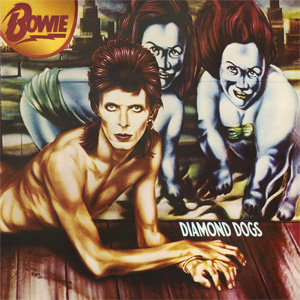
David Bowie - "Diamond Dogs" (1974)


So next up in the David Bowie discography is Diamond Dogs, where Bowie eschews from the Ziggy Stardust / Aladdin Sane character concept for an entirely new character, world and concept. The record was originally conceived as a musical adaptation of George Orwell's 1984, although his estate denied Bowie the rights to the novel. The idea was then reworked into Diamond Dogs, a post-apocalyptic concept album featuring the character Halloween Jack, a roller-skating, rogue, anti-hero who roams the rooftops of devastated Manhattan with his gang called the 'Diamond Dogs'. Musically, the record is somewhat transitional for Bowie; being still firmly rooted in glam rock territory, but with hints of the funk and soul music which would become centre stage of Bowie's next releases.

Diamond Dogs is unfortunately the first Bowie record that I've talked about here that hasn't really connected for me, due to a couple of reasons. Most prominently, the premise and concept feels clunky and underdeveloped. Some of the songs refer directly to 1984 as Bowie had already written some tracks before asking for the rights, and they feel awkwardly smooshed together with the Halloween Jack / Diamond Dogs ideas. This means neither element is really explored in great detail. The 1984 stuff feels like just a scant retelling of the book, and the album doesn't really explore who Halloween Jack is or what the world he lives in is like. The way the album is presented doesn't help these issues. The opening track is a dramatic spoken word intro, multiple tracks run into each other, and the whole album feels so grandiose that it makes it seem like it's about something. But the lyrical content doesn't really back this up and makes the whole record seem pretty pretentious.

The second issue for me is that the songs just aren't very memorable. The only truly vital Bowie track on the record is Rebel Rebel, which is one of his finest, catchiest and coolest songs ever. The chugging riff and Bowies charismatic swagger combine to make such an effortlessly cool tune. The other tracks are just unremarkably okay. The other more traditional glam rock songs feel very generic and by the numbers, and the other songs don't really work outside of the record due to generally being quite short and heavily involved with the albums story. And considering that the story and themes of the record don't really land, its ultimately detrimental to the tracks which are composed well with interesting elements to them. I'd say aside from Rebel Rebel, the run from Sweet Thing to Candidate to Sweet Thing (Reprise) is the most compelling part of the album. The three tracks have seamless transitions and taken as a complete whole they do build a compelling song that transitions between different sections that feels satisfying. However, as individual tracks they aren't memorable enough on their own; they only really work as the three track run.

Diamond Dogs isn't a bad album, but is held up by it's half-formed concept and the over-the-top theatrics which worm their way into almost every song here. This leaves the songs feeling uninspired and unimpactful at a micro level, and the whole album lacking any draw at the macro. The glam rock tropes feel tired and played out, and the elements of soul and funk feel more like window dressing than a full exploration of those sounds. For someone listening through Bowie's discography, I would recommend purely as a reference point for Bowie's musical shift and personal life at the time (his cocaine addiction was really ramping up at this point, probably explaining the lack of focus on the record); but it's not an album I'll come back to again and again like Ziggy and Aladdin Sane. Everything this album attempts, Bowie has done better both before and after.

Top Tracks: Sweet Thing, Candidate, Sweet Thing (Reprise), Rebel Rebel

5/10

Tuesday, 30 July 2019

Hozier - "Wasteland, Baby!" (2019)

I was initially incredibly disappointed by this record. Hozier's 2014 self titled debut was this intensely soulful release, packed full of blissful highs and deep, dark lows with a very twisted and sinister imagery regarding lust, religion and death. Last year he also dropped a great teaser EP for this release titled Nina Cried Power, so I was expecting good things from this. Although I feel the record is better than my initial reaction to it, it is not without its flaws which do bog down the enjoyment for me.

The album opens with the title track of last years EP, a stomping protest song featuring excellent vocals from the incredibly talented Mavis Staples. While I did really enjoy the song when I first heard it, over the subsequent listens of the EP and album I feel like I have got all I can out of the song and there's nothing new it can give me. I think this is probably due to the vagueness of the lyrics making it feel like it isn't really saying anything I can get behind, besides the general 'let's inspire people!'. The next track, Almost (Sweet Music), is where the problems start to show. The tune is this light, upbeat, poppy one; which in itself is fine. However the bass and drums are so overdone in the mix that it sounds somewhere in-between some kind of Ibiza club tune and one of those annoyingly ear-wormy Shaun Mendez singles.

This kind of awkward commercialisation of Hozier's style is rampant in the first half of the record. Movement is this album's attempt at the dark, brooding, building single (a la Take Me To Church). However this song feels so pristine and manufactured, without any of the sinister imagery which made those moments work on the first album. It sounds like someone trying to imitate Hozier's style without any of the nuance. The only truly great moment on the first half is No Plan, a slick song with a groovy bass about just living life and not worrying about a plan. Hozier's vocals soar above this effortlessly cool tune. All the edgeless commercialisation comes to a head in To Noise Making (Sing), a track about as cringily twee as a Train song.

Luckily after this point the album really regains some footing, and while not every song is a complete smash, there is a consistent level of quality the record maintains. Every song is at least decent. Highlights include the back to back folk due of As It Was and Shrike, and Dinner & Diatribes. As It Was is moody and dark, whereas Shrike (also featured on the Nina Cried Power EP) is much more relaxed. Both tracks are simple and restrained, allowing Hozier's soulful lyrics to shine. Dinner & Diatribes, on the other hand, is loud and frantic. The rising and falling guitar line and pounding drums give this tribal vibe to the track. I love the little synth melody which follows the last line of the chorus in this call and response style. It really adds to the intense atmosphere of the track. The album closes out with the title track, a quiet tune about two people falling in love in the midst of the apocalypse. Hozier's voice is buried in vibrato, making him a feel a subtler part of the track than usual. It's a hopeful note to end the record on.

Wasteland, Baby! is a strange album. It is so front-loaded with overproduced, commercial songs; and yet the the back half is consistently good. You can honestly feel the shift at the half way mark. Removing the radio-tailored nothing tracks would have made it a more enjoyable (and less bloated) listen.

Top Tracks: No Plan, As It Was, Shrike, Dinner & Diatribes, Wasteland, Baby!

6/10