Friday, 28 August 2020

The Killers - "Imploding The Mirage" (2020)

The Killers were one of my favourite bands as a teenager, and although it's only their first two records that are truly great, every record they've brought out since then has been at least decent, since the band have settled into their style of heartland rock meets new wave and do it pretty well. I know what I'm getting with a Killers record, and I know I'll enjoy it in the moment, even if it doesn't stick with me over time.

That being said, I enjoyed the group's last release, 2017's Wonderful Wonderful, slightly more than Day & Age and Battle Born due to the sense of subtlety and insecurity it had (perhaps due to tensions within the band preventing them from recording a record for 5 years). Killers records are usually bombastically optimistic and earnest, but WW had a real vulnerability and unease to it. Imploding The Mirage is the exact opposite. This is easily the most bombastic and stadium sized record the band has released so far, and it is kind of it's undoing. Almost every track here turns it up to 11, as if every song is trying to be the album's climax, which ultimately is to the detriment of the songs here, as most of them are pretty good.

Lead single, Caution, is the best of the bunch. A typical Killers lead single, sounding absolutely massive with a rip roaring, anthemic chorus, wailing guitars and synths and a kick ass guitar solo courtesy of Fleetwood Mac's Lindsay Buckingham. "I'm throwing caution..." Brandon Flowers wails in the Springsteen-esque chorus and it captures that sense of catharsis and sheer overwhelming emotion that all the best Killers songs do. The thing is, it is the 4th track on the record, with the two similarly Springsteen inspired and massive singles My Own Souls Warning and Dying Breed before it. When I heard them for the first time in isolation, despite them being pretty good songs, they felt like just not quite as good versions of Caution. On the record however, because they come first, by the time I get to Caution I enjoy it less, as I have already been bombarded by these tracks without any respite in a more subtle moment. As a track, My Own Souls Warning has grown on me quite a lot. It's the kind of opener that really pumps you up with soaring melodic synths and jangly guitars, and Flower's slightly wobbly vocal inflections on the song give it a really endearing nature. It's a real feel good song. Dying Breed is built on drum samples from krautrock legends Can and NEU!, which give the song a unique sound in the first half, but are overwhelmed by the more standard Killers instrumentation as soon as the live drums kick in and you can barely hear that original rhythm. The track does have one of the best choruses on the record though, so it's an odd mixed bag of a track.

The album only really comes close to having a subtle moment to regain itself in two places, in the tracks Blowback and Fire In Bone. I really like the gentler instrumentation on Blowback, but the hook is one of the weakest on the record and it really kills my enjoyment of the song. Brandon really sang "She's breathing in the blowback" and expects it to be a singalong chorus?... Fire In Bone, on the other hand, I really like. It's a funky, Talking Head's inspired track that stays reserved and lets you enjoy it's groove and quirky lyrics. It does climax towards the end of the song, but unlike most the tracks here it doesn't explode into the first chorus, setting it apart from the others.

A couple of the later deep cuts, Running Towards A Place and My God, also impressed me quite a bit. Running Towards A Place channels a very pop-era Fleetwood Mac energy with a silky smooth bass-line that's a lot less pummelling and intense than the ones on the singles, but still builds up the layers as the track progresses to a big climax that feels very earned. All the little guitar and synth licks are placed just in the right moments to give the track a lot of character. My God has a really catchy chorus that embedded itself into my brain on first listen. Flowers and guest Weyes Blood sing it in this kind of blocky flow that puts emphasis on every other word in each line. It's pretty memorable. The drums on this track are thunderous, just pummelling along with the melody. Weyes take the lead on the bridge where the track shifts to a Madonna sounding synth pop sound, and while it sounds completely different to the rest of the song, it works.

With every track trying to be the most epic on the album, some do lose out. Lightning Fields is quite forgettable, being super reverby with a long meandering chorus that doesn't really have much of a hook to it, yet Brandon is still singing is heart out trying to make it sound important. When The Dreams Run Dry is the only serious dip in quality on the record, as it has this kitchen sink mentality which makes it feel like one of those tacky novelty 80s new wave songs that would smash other genres into the typical synth pop format just for the sake of it. The track has kind of a reggae beat and tropical synths, and Flowers even does a stereotypical 'reggae' vocals for the second verse. The chorus is also so blown out and too loud, and the whole tropical angle is dropped in the second half, which means the track doesn't really end up anywhere interesting, it just sounds a bit cheesy and tacky.

Imploding The Mirage is the kind of record that is pretty decent, but could've been a lot better if the band didn't insist on turning it up to 11 on every single song. It really needs a couple more genuinely reserved songs for it to feel like a complete album. That being said, if most of these songs came up on shuffle, I wouldn't skip them; which shows that the album's issues aren't to do with the writing, more the structure. It is a bit disappointing, since Wonderful Wonderful seemed like the band was on the right track, although this album is still isn't the group's weakest (Battle Born has it beat for that). Yeah it's Killers album, so if you know what to expect from the band, you'll get at least something from it.

Top Tracks: My Own Souls Warning, Dying Breed, Caution, Fire In Bone, Running Towards A Place, My God

6/10

Thursday, 20 August 2020

Glass Animals - "Dreamland" (2020)

Glass Animals first two albums were pretty different, but equally great records that mixed up a lot of different sounds and styles including art pop, psychedelia, R&B and indietronica. However since the release of How To Be A Human Being in 2016, the band's drummer Joe Seaward was involved in a serious cycling accident and suffered brain damage, causing the band to go on hiatus while he recovered. Thankfully he has made a full recovery, and the whole experience left frontman Dave Bayley wanting to create a more personal album for their next release, as opposed to the eccentric character studies of HTBAHB.

This shift in lyrical content has also been accompanied by a shift in sound as well. The R&B elements of their sound take the centre stage here, with the psychedelic and art pop tendencies nowhere to be found. These R&B influences have been augmented with more than a handful of trap beats and a general washed-out, hazy dream pop atmosphere. I understand that this an attempt to match the dreamy nostalgia of the lyrical content, and that the more eccentric elements of the band's sound in the past would not have fit. However the album doesn't really sound dreamy, it sounds flat and sedated. This is part due to how slickly produced it is, but mostly due to the generic and predictable songwriting on both fronts - lyrically and musically.

Nearly every beat and groove on this record feels like I've heard it before in some generic pop tune on the radio in the past two or three years. It's the same thing with the hooks, melodies and chord progressions. It's almost as if the band was aiming for that market of boring, meaningless, 'vibey' pop songs that leave no impact and say nothing. The title track opens up the record with the most generic of Ibiza styled piano riff's before Bayley comes in with the most repetitive of vocal melodies, all filtered through so much reverb and echo it just sounds like slush. That's literally all the song does for three and a half minutes. The following track, Tangerine, sounds like Bayley heard Childish Gambino's Feels Like Summer, tried to make it, and ended up making something that sounds enough like it for it to be noticeable, but with a melody and groove so repetitive it fails miserably at recreating that euphoric summery vibe. It's All So Incredibly Loud is a linear track that is supposed to build and build throughout until the climax at the end of the song. However, the chord progression and synth crescendo at the of the song sound like any summer club track you'd here over the past 4 or 5 years; even if the percussion rhythm at the base of the track is decent.

Lyrically the album just doesn't work either. It's supposed to be about Bayley's experiences growing up - so it's a coming of age story. But it isn't; it's just a bunch of references to things from the late 90s / early 2000s (Space Ghost Coast To Coast is basically just a list of early 00s video games), and generic 'vibey' party songs about partying and sex and booze. There's no story here, no arc. Bayley is telling us nothing about himself, and filling in the gaps with his usual references to fruit and other random things. This fractured, whacky lyrical style worked on HTBAHB when he was turning it up to 11 and creating these incredibly eccentric character studies. On Dreamland, it seems like he doesn't want to turn himself into a caricature like this, but toning down the eccentricity just makes obvious Bayley's lyrical shortcomings.

While the majority of the record, while incredibly dull and boring, is inoffensively bland; there are a handful of real stinkers in here. Tokyo Drifting features Bayley's absolutely terrible attempt at trap rapping, and his vocals are filtered with so many effects that it genuinely sounds horrible. Luckily he hands the reigns over to Denzel Curry half way through, and Denzel being an incredibly talented rapper almost saves the track (but not quite). Melon And The Coconut personifies a fracturing relationship as these two fruit talking to each other, and it as stupid as it sounds. Bayley's vocals are filtered through the worst auto-tune imaginable, and there's a bluesy guitar part in the track that feels like its been put through the same awful effects. Waterfalls Coming Out Your Mouth obsession with sex really rubs the wrong way, I think due to it trying so hard to come across dirty and edgy while still attempting to be random and quirky. There's a lyric about gummy bears in this track, and gummy bears are not sexy, and trying to make them sound it comes across really weird and creepy. The track is also awfully mixed. Every part of the song is either too loud or too quiet at various points, but the dynamic is constantly shifting and it sounds terrible.

There are a couple of tracks that do feel fairly decent, although they would easily be some of the weakest tracks if they appeared on the group's first two records. Hot Sugar is built on the same jazzy sample as Loyle Carner's You Don't Know from last year, and it gives the song more of a sense of genuine coolness and actual life to it, and the vocal melody isn't too bad either. However if I think about the track too much, all I can think of is that if I like the song because of the sample and You Don't Know uses the sample better, why aren't I listing to that instead? Your Love (Deja Vu) is easily the best track here. The beat and bass groove on the track give it the greatest sense of urgency and momentum of any of the songs, and Bayley's vocals sound sensual and impactful. And the melody is actually catchy and not repetitive.

This record is one of those ones that feels so much longer than it is, by virtue of it being so repetitive and boring. I could not tell any of tracks from the last leg of the record apart from each other, because they all sound the same, and all sound so weak and unmemorable. Furthermore, there are enough stinkers on here for me to not ever want to come back to it. I find it so perplexing that the band threw out everything that made their first two records really interesting and fun, and replaced it with a sound that is already done to death, that they aren't even doing to a degree of any quality. This is not a good album and I'm really disappointed by it.

Top Track: Your Love (Deja Vu)

3/10

Tuesday, 11 August 2020

Pink Floyd - "Dark Side of the Moon" (1973)

So last summer I started listening to Pink Floyd's discography properly, however I ended up only listening to the band's first two albums, and only ended up writing about the first. However a documentary I watched on concept records which featured The Dark Side of the Moon pretty prominently, and its (obvious) inclusion on my '100 Albums to listen to' poster has spurred me on into listening to the groups 8th studio record, regardless of my original intentions of listening along chronologically. I'm glad I did, because Dark Side is a fantastic album, and it is so obvious why it was such a game changing album when it released, and the influence it has had on some of my favourite artists and records is blatant.

Compared to the band's earlier releases, Dark Side is so much more accessible, musically and lyrically. None of the tracks here take the weird left field turns that the first few records do, and all follow the consistent theme of modern human life - from birth to death, and all the trials and tribulations people face along the way. Every track on the record transitions smoothly into the next song, aside from The Great Gig in the Sky and Money, being at the end of side 1 and the beginning of side 2 on the original vinyl format of the record. This lends the record an incredible flow, particularly in the first half, where the entire side feels like one long, multi-part song.

Part of why the first half of the record flows so well is that it follows a clear linear narrative. The intro, Speak to Me, is essentially the moment of birth; which leads into Breathe (in the Air), with lyrics that read like a parent setting up their child for adulthood. On the Run is a tense instrumental piece which reflects the frantic nature of adult life, before Time slows the album back down with lyrics dealing with all the dull, mind-numbing tasks you have to do to exist in society as an adult that you can't run away from. The half climaxes with soul inspired The Great Gig in the Sky, which represents death and ascending to some sort of afterlife.

Breathe is the first proper song on the record, and it sounds beyond phenomenal. The woozy, psychedelic guitar tones on the track sound so dreamlike and enveloping. The same sound and atmosphere runs through Radiohead's OK Computer, and listening to Dark Side, I can see how it Directly influenced Radiohead when making that album. Time opens with a disorienting barrage of sampled clocks ticking, chiming and alarms before settling into the same hazy atmosphere as Breathe (there's even a reprise of Breathe at the end of the track). The track slowly builds towards the introduction of vocals which build up the momentum in the song. David Gilmour sings "Ticking away the moments that make up the dull day" as the opening line and it sums up the mood of the songs perfectly; the unavoidable banality that soaks up all of your time for your whole life. The Great Gig in the Sky features no lyrics, just the emotional, soulful wails from singer Clare Torry. The track feels triumphant and ethereal, which is quite a positive spin for a track literally about dying.

The second half of the record follows less of a linear narrative, with subject matters that are more broad and grand than the experiences of just one person. Money opens the side with the iconic sounds of cash registers cashing and clicking. These layer up and morph into a mechanical drum beat as Rodger Water's bluesy bass riff combines and drives the song along. It's easily the most direct song on the record, with Gilmour's vocals howling about how money and greed drives all of society's ills. The guitar solo towards the end of the song just roars and wails. Us and Them, by contrast, is so dreamlike and foggy. A jazzy saxophone and echo-y vocal effects make you feel like you're walking around in the clouds. The nearly 8 minute song is also lyrically quite foggy and more abstract. The track revolves around the ideas of conflict and division, at the scales of interpersonal relationships, society, and at the global scale of wars between nations.

The last three tracks are a lot shorter, and flow together like a medley. Any Colour You Like is another instrumental, and features the return of the woozy guitars from Breathe and Time and represents the illusion of choice in society (the title is a reference to the Ford Model T, which only came in black to aid in mass production). Brain Damage, inspired by former member Syd Barett's drug abuse and resulting mental health issues, is about how the stresses and strains of life can be too much for some people and cause them to loose their minds. The track has a different atmosphere than the rest of the album, feeling more fairytale like reflecting the separation from reality that Syd and so many others appeared to feel. Eclipse is quite an anthemic closer, with very simple lyrics repeating "All that you... see/touch/feel/ect". It brings together all of the topics of the past 9 tracks under the final statement that 'this is life'. All of the good, all of the bad; and you can't avoid any of it.

Musically, this album is phenomenal, and sounds just as enveloping and rich as any album today. It doesn't sound like it has aged one bit. However, lyrically the record goes for a generalist approach which I find slightly stops me being completely absorbed by it. None of the tracks feel particularly personal, being sung in the second person and talking about very universal experiences. Take Brain Damage for example; the track is inspired by Syd Barett's declining mental state, but it's not about it specifically, it's about losing your mind just generally. This isn't a criticism really, just more personal preference.

The Dark Side of the Moon is a fantastic album still to this day, and it is blatant how game-changing it was when it was first released. It's so much more accessible than the band's earlier work, yet remains so inventive and incredibly well written and performed. It is such a complete experience back to front, and at only 43 mins it is really replay-able for how grandiose it is.

Top Tracks: Breathe (In the Air), On the Run, Time, The Great Gig in the Sky, Money, Any Colour You Like, Brain Damage, Eclipse

9/10

Friday, 31 July 2020

David Bowie - "Aladdin Sane" (1973)

Aladdin Sane sits in a slightly weird position in David Bowie's discography, as somewhat of a sequel to his break-out The Rise and Fall of Ziggy Stardust and the Spiders from Mars, but also kind of not. The titular character was originally pitched by Bowie as someone different to Ziggy, but is a lot less defined, and Bowie continued to tour as Ziggy for the live shows of this era, which has led this record to be viewed as somewhat of an extension of Ziggy (or Ziggy goes to America, in the words of Bowie himself).

Despite not having a linear narrative (or mentioning Ziggy once), Ziggy goes to America is exactly what this album is about. Ziggy Stardust was an album about the best a rockstar could be, literally saving the world through 'peace, love and rock'n'roll'. Aladdin Sane is about the worst: the sex, the drugs, the vanity. It was written on the American leg of the Ziggy Stardust tour, about what Bowie experienced there, and references many American places. The music is also jacked up to have a hard rock edge, inspired by the likes of The Rolling Stones; partly to appeal more to an American audience, partly to reflect the darker and more dangerous lyrical content of the record.

This is evidently demonstrated in the record's lead single (and one of Bowie's most famous tunes), The Jean Genie. This swaggering, cock-rock riff provides backing to the description of the person/creature/thing that the Jean Genie is. Bowie's tongue slithers around the lyrics, describing the Genie's appetite for razors and that he steals dead hair to make underwear. There's something so off-putting about this character, yet combined with the ear-wormy riff makes it so irresistible and captivating. Cracked Actor, similarly, has really overt and graphic references to cocaine, sex and prostitutes; with Bowie singing in this narcissistic snarl over roaring guitars. The track has some really tragic undertones as well with lines such as "show me you're real" and "please stay, please stay". It's as if the character Bowie is playing (or Bowie himself, it's hard to tell) has lost all feeling, and is sustaining themselves on the small amounts of dopamine that the drugs and sex give them.

Not everything on the record has the loud, swaggering rock aesthetic. There are a few slower, piano led tunes which are among the most reserved and artiest on the album. The title track introduces the character of Aladdin Sane to represent the glamour and high society of the rockstar lifestyle: the fancy hotels, the all-night parties, the adoring fans. The twinkly piano notes and gentle guitars make the track feel equally glamourous, but the song slowly descends into this hypnotic madness, climaxing in an avant-garde jazz piano solo performed by Mike Garson. It cleverly conveys the idea that this kind of egotistical lifestyle will send someone insane. The track Time personifies the concept of time as the ultimate nemesis to the rockstar-gods Bowie is describing on the record. They may think they're invincible, but time will always take everything away in the end. They will grow old and lose their sex appeal, the drugs will degrade their physical and mental health, the fans will move on to someone new. The stomping piano chords give the song a very pantomime villain vibe, alongside Bowie's overly dramatic and expressive vocals. The closer, Lady Grinning Soul, is the last of these piano tracks, and has similar moody, dramatic atmosphere to the title track. Bowie croons over the twinkly piano notes and acoustic guitar, and the way his voice builds up in intensity towards the end gives off a very bond-theme vibe to close out the album.

Unfortunately, not everything on the album works as well as these tracks. The opener, Watch That Man, is very inspired by The Rolling Stones. This track, alongside a cover of Let's Spend the Night Together, almost feels like Bowie is trying to outdo the Stones at what they do best and it just feels a bit over the top. Drive-In Saturday is inspired by 50s doo-wop, but glammed up a bit. The song has a much more whimsical nature than the rest of the record, telling the story of a post nuclear world where people have forgotten how to make love and have to relearn by watching old romantic films. While I enjoy the lyrical content of the song, the style it is paying homage to is just not something I'm all that fussed about. The Prettiest Star is also in this kind of style, but lacks Drive-In Saturday's engaging story, and so is easily the least interesting track here.

These tracks are no where near bad, they just don't quite work for me the same way the rest of the album does. I also think the album's legacy being so closely tied to The Rise and Fall of Ziggy Stardust and the Spiders from Mars does it no favours, as they are very different beasts when you get to know them. Aladdin Sane is dramatic and experimental, where Ziggy is whimsical and comforting. But on it's own merits, Aladdin Sane is a wonderful, if slightly inconsistent album.

Top Tracks: Aladdin Sane, Panic In Detroit, Cracked Actor, Time, The Jean Genie, Lady Grinning Soul

8/10

Monday, 20 July 2020

black midi - "Schlagenheim" (2019)

I've been intending to talk about black midi's debut record, Schlagenheim, since last year. However, it's the kind of record that I have to be in a very specific mood for, as it is a very loud, erratic and abrasive album. When I am in the right mood for it, I have a really enjoyable time - but that isn't all that often. Schlagenheim mixes hypnotic math rock grooves with post-hardcore and noise rock instrumentation so loud and abrasive it feels like your ears are about explode; alongside experimental song structures with multiple passages and a positively deranged vocal delivery from frontman Geordie Greep.

The first thing which greets you in the opening track, 953, is a super noisy thrashing on all the instruments before the song settles into a very minimal and restrained section with the first bit of vocals on the album. Greep sounds like some sort of weird, twisted preacher talking about condemnation and sins. The loud thrashing then return momentarily before the second verse follows the first in a more restrained style. The track closes out with an even more manic instrumental section featuring erratic piano notes. The following track, Speedway, couldn't be more different. It features this really tight math rock groove that sounds really clean and hypnotic, with vocals from bassist Cameron Picton rambling about houses and building codes. It makes the track sound sort of Talking Heads-y to an extent.

This erratic nature is carried throughout the entire album, with the short, linear, pummelling nature of Reggae and Near DT, MI followed by the 8-minute multi-section Western. The gentle parts of this song are definitely the most serene the album gets, and the louder sections sound oddly triumphant. I think this is due to Greep's extremely eccentric delivery combined with the electronic swells in the background. The back half of the track gains some grit as the groove speeds up and up, before blindsiding you with a sudden switch back to the gentle first part of the song.

I do find that the album does get a bit much in the second half, with Greep's vocals becoming consistently more deranged and possessed, and the harsh, distorted loudness more persistent. The vocals on bmbmbm (yes that is the title of the track...) are something that has really stuck with me because of how insane (and frankly pretty offputting) they are. Greep repeats the line "she moves with a purpose" over and over like some sort of lunatic stalker over an incredibly tense and harsh repeated bassline. The screams and laughs at the back of the mix only add to the insanity of the track.

The closer, Ducter, is one of the most restrained and sane tracks on the album, and its one of my favourites. The track is built off this chiming, repeated guitar pattern and a rising and falling bass. Greep's vocals are a step down from the relentless insanity and are pretty intelligible. The track slowly builds up to its climax, with each element introduced one at a time; with the track never being overcome by the noise. Greep sing's "You will not break me" with the same sort of eccentric triumphance as he does on Western.

This album is certainly not for everyone, and I have to be in the right mood to enjoy it. But there is a sense of virtuosity and daringness to just how unique it is that I really respect. However I think it is just too standoff-ish and challenging for me to ever really love. To be honest, a lot of my appreciation for individual tracks on the record has been through them coming up on shuffle, where I can move onto something else afterwards so the relentless noise doesn't drain me.

Top Tracks: 953, Speedway, Reggae, Western, Ducter

7/10

Monday, 13 July 2020

Coldplay - "Parachutes" (2000)

Coldplay's debut record, Parachutes, turns 20 today (well the day I started writing this), and is an album dear to my heart despite the general consensus that it is fairly derivative of the likes of Radiohead and U2 and not even the most 'definitive' Coldplay record. There's just something I find so entrancing by the tone and atmosphere of the record, and the songwriting on here is top notch even if it is entirely straightforward and conventional.

Parachutes is one of those records that seems to work in almost any context for me. It's moody and emotional, yet its also joyous and hopeful. Its gentle and deep, but also light and summery. It works equally well on long summer evening as a cold, damp winter night. I can put it on to relax to, be uplifted by, or contemplate with. Each of the ten tracks have a darkness to them, yet they all are spun in such a way that there's always a point of hope in them. It's so incredibly cathartic and versatile. I also find the straightforwardness of the record one of its biggest strengths, maintaining this moody yet warm acoustic rock throughout with only a slight ebb and flow of more energetic electric moments. It is also a trim 41 minutes with absolutely no filler.

The record opens with the incredibly moody and existential Don't Panic. The track is just over 2 minutes and features pretty apocalyptic lyrics which I have always took to be about climate change, but like the majority of Chris Martin's lyrics (especially in the early days of Coldplay) they are general but emotive enough that they don't have to be. It gives Don't Panic, and the rest of the songs on Parachutes, so much more strength than some of the other emotional soft rock bands from the 2000's. The track, also like a lot on here, spins itself on its head in the last verse; in this case Martin sings about how everybody has someone to lean on and we can make it through together.

Following this is Shiver, which is my favourite Coldplay song across their entire discography. The track starts off very reserved and gentle, before exploding into the first chorus. Martin's lyrics about an unrequited love are so apologetically earnest yet pure and wholesome. There's no tragic angst or self loathing like in something like Radiohead's Creep, and the way the electric guitar wails at the end alongside Martin's howls that he will wait for this person, and wait for them to notice him, just really hits the mark for me. It's just one of those songs.

It is also as about as heavy as the album gets, after this point settling back into the acoustic groove with the electric guitars only really used sparingly for texture more than melody. Spies is just as paranoid as Don't Panic, although it is a more drawn out song which allows you to fall into its eery nature. It also flips itself over and picks its self up towards the end. Sparks is such a gentle piano led track, where Martin refers to 'seeing sparks' as a real special connection with the person this song is written about. He addresses past mistakes that have hurt this person, and how he wants to make things better because of how special this connection is. I remember putting it on a few years ago, as it was snowing at night outside my window. It has that warm gentle atmosphere.

There are two other piano led songs on the record, Trouble, and the closer, Everything's Not Lost. Trouble is perhaps the most downtrodden song on the record, as it lacks the positive spin that the rest of the tracks have in their closing moments. The simple piano riff sets the darker tone as Martin alludes to being caught in traps and spider's webs that he can't get out of, and that he didn't mean to cause anyone else trouble. Apparently the song is just an apology to the rest of the band about his sometimes controlling nature in the studio, but it feels much darker and more serious than that. It anchors the album in a way, showing that sometimes you can't just say "things will get better" to every problem you face. Everything's Not Lost is the opposite, and sets the blueprint for the big optimistic climax moment in most future Coldplay albums. Unlike some of those future efforts it remains very sweet and genuine with the focus remaining on Martin's vocals and the uplifting piano notes. None of the overblown production and multi-tracked choral vocals that make something like Up&Up feel pretty tacky. There is a hidden song titled Life Is For Living at the end of Everything's Not Lost and it is a nice little ditty which feels like an appropriate coda for the track and the record as a whole.

In between Trouble and Everything's Not Lost, the record becomes its most mellow and malaise like. The Title track is 45 seconds of acoustic summery bliss, and High Speed feels like speeding along in a convertible on a hot summers day. The distant atmospheric swells of electric guitar gives the song a more driving pace, despite the song being one of the most carefree on the record. This is followed p by We Never Change, a super slow and reserved song where Martin details his desire for a simple life living with his friends, free of life's troubles, but acknowledges that some things will never change, and there will always be new challenges to face.

The only song I have yet to mention is the band's breakout, global smash single, Yellow. That's because you've definitely already heard it 1000 times. Yes it is overplayed, and yes if you think about the lyrics too much it starts to feel like nonsense. But you can really feel the emotion in Martin's voice and can't help but be moved by it, and it feels far more genuine and less calculated than some of the band's future emotional singalong anthems.

Parachutes is just one of those records for me. I acknowledge that it doesn't do anything all that interesting or unique from the grand objective view of the history of rock, and that the band's follow up, A Rush Of Blood To The Head, has a more unique identity. However every single moment on the album just works for me, I can enjoy every single second of it when I'm in a variety of moods.

Top Tracks: Don't Panic, Shiver, Spies, Sparks, Yellow, Trouble, Parachutes, High Speed, We Never Change, Everything's Not Lost

10/10

Tuesday, 7 July 2020

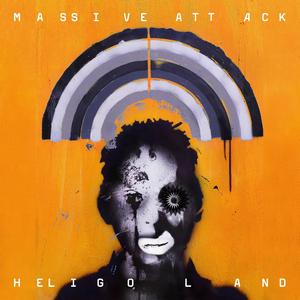
Massive Attack - "Heligoland" (2010)

7 years after their last studio album release, Massive Attack returned with their most recent LP, Heligoland (named after a German Island archipelago). The record also features the return of Grant Marshall to the group and a step away from the incredibly synthetic and electronic sounds of 100th Window, back towards the more organic soundscapes of the first three albums. It's a change I welcome, as I much prefer that side of the group's sound. However it is not just a rehash of their 90s era, with the group creating an entirely different atmosphere and soundscape. In the years since the group's peak, artists like Gorillaz and Radiohead have combined electronica with mainstream rock and pop in a more immediate way, and I can definitely here that influence within Heligoland. The synth tones are sharp and colourful, and really pop out of the mix; and the guitars have a real snarl to them in places, making this the rockiest of all the Massive Attack records. Gorillaz' Damon Albarn even features as a guest vocalist on one of the tracks.

The first half of the record gives off a very hot and desert-y atmosphere. While not sonically similar to stoner rock, it has a similar feel to it. It's tense, dirty and loud. The opening track, Pray For Rain, kicks things off with a very dry, rolling drum beat and moody piano keys as Tunde Adimpe's slow and somewhat prayer-like vocals chant about 'praying for rain'. This prayer is seemingly answered by a section with much more saturated 'plink-plonk' synths and ethereal backing vocals in the middle of the track before returning to the moodier drums and piano section to pray once more. This is followed by the glitchy and dancy Babel. The track has a real propulsion to it, and also has a real juxtaposition between Martina Topley-Bird's very smooth and gentle vocals against the harsh and industrial beat. The descending melody of the hook lodges itself into your brain.

Perhaps my favourite track on the record is Girl I love You, a massive sounding tune that leans into the bands dubby side and also a bit of dancehall. The track builds off this rumbling guitar line, with the tension rising until these fat, distorted horns blindside the song and the whole track just explodes in colour. It sounds like stumbling upon a secret carnival in the middle of the desert. Horace Andy kills in on the vocals, sounding so dramatic yet keeping his cool. Towards the end of the track the horns disintegrate into a frenzy, leaving the impression that this carnival of colour might just have been an illusion, a mirage. Following this, Martina returns for the hypnotic Psyche. The track is built off a super simple, super short acoustic guitar loop and the multi-tracked vocals add to the delirium.

However from this point onward the hot desert-y atmosphere starts to boil over into heatstroke. Everything becomes a bit dour, but not in a good way. Guy Garvey is a magnificent vocalist, but he was not the right fit for the incredibly ridged and skittery beat of Flat Of The Blade. He tries his best to sound rough and gritty, but it just doesn't work. Rush Minute is honestly pretty forgettable and Saturday Come Slow is probably the most dour the record gets. Damon Albarn's performance comes across bitter and sour, as opposed to the dreamy and wistful performances he tends to give on Gorillaz' work. I see why Paradise Circus is the most played track on Spotify, it's the only track that comes close to the elegance of the likes of Unfinished Sympathy and Teardrop. However for me, the repeated piano motif is so short and simple it starts to get a bit annoying. It becomes less of a problem towards the end of the track as the song becomes less reliant on it and some soothing strings pop into the mix, but at this point it feels a little to little, a little too late.

The record does bring back some of the intensity and colour for the closer, Atlas Air. This 8 minute tune grows out of a repeated drum loop and some spooky, psychedelic synthesisers. It's simple but groovy and enticing. The synths become darker and more distorted as the track progresses like it's swirling out of control. It's a shame the record looses all momentum before this point because it is a pretty strong closer.

Heligoland is a bit odd within Massive Attack's discography, because it's the only one that isn't consistent. It has some of the group's best songs, and also some of their weakest. However the highs of this record do make me feel like I'd throw it on more than I would 100th Window, and none of the lows are particularly bad, it's just a shame they all come in the second half. It makes the album seem quite lopsided.

Top Tracks: Pray For Rain, Babel, Girl I Love You, Psyche, Atlas Air

7/10